






















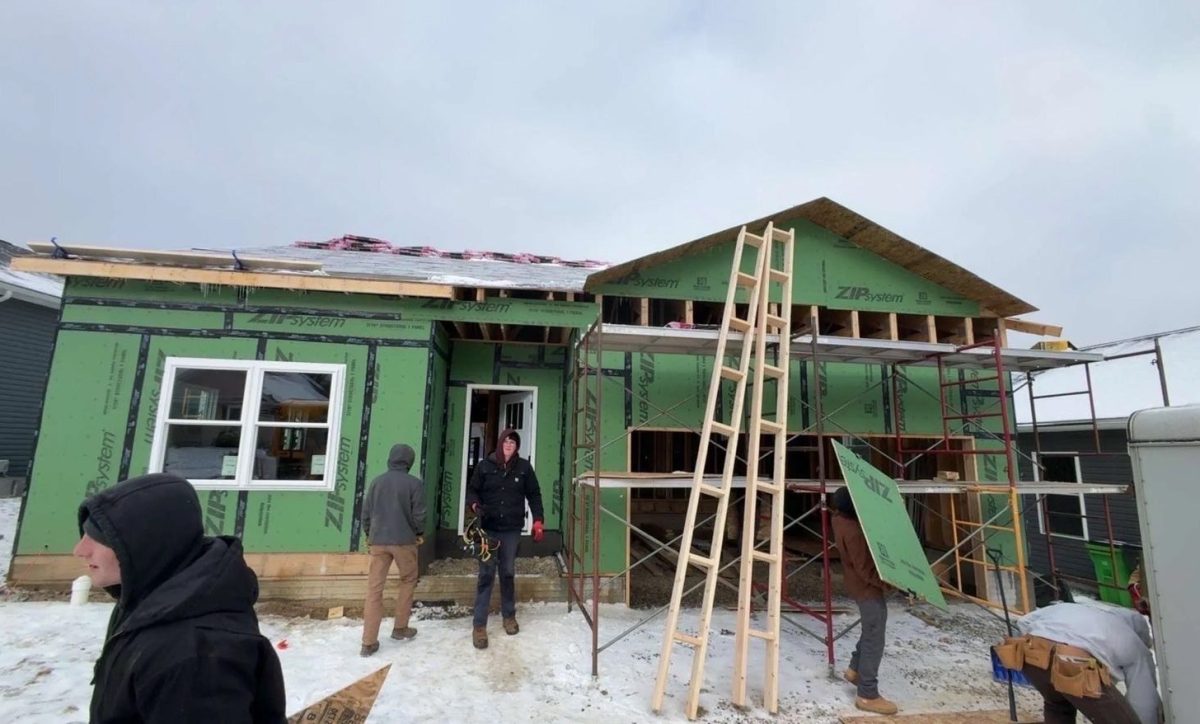
The seniors in the Carpentry Compact Program began building a house in Doylestown during the first month of school and are working to finish it.
Every day of the school week, the carpentry program meets at 11:45. They try to leave the building at 11:50 for Doyelstown, where the house is located, to continue construction. They then return to the building around 2:00 every day. They are out for about two hours a day for construction, but end up working on it for only about an hour and a half due to travel time.
A student in the carpentry compact program learns the basics of the carpentry trade: plumbing, squaring and leveling. Once they master these skills in their senior year, they can begin the senior project: building a house from the ground up and practicing the skills they learned throughout the year.
“In the junior year, students build storage barns for local customers and learn house construction on two 10×12 mock houses in the lab,” Mike Horvat, the teacher of the Carpentry Program, said. “During the senior year, students build an actual house from the ground up, including framing, roofing, siding, drywall, paint, and trim work.”
Last year, Senior Reagan Bradley worked on the house as a junior once the seniors graduated in early May. Since the seniors were a little behind, he, along with other junior compact members, had to complete some of the finishing work on the house.
This year, 20 seniors in Horvat’s class are working on building the house. Horvat also has 25 juniors in his class, but they do not work on the house as much as the seniors do.
“The house is primarily a senior project. However, we did take the junior class out on the day we set trusses for extra manpower,” Horvat said.
The construction of the roof has been the most difficult part of the process, taking the longest time so far. They began construction of the roof in mid-November, but due to weather conditions, it has become dangerous for students to get up there, and snow days have made it difficult to work at a consistent pace.
“We’re almost done with it now, but it’s been slowing us down,” Bradley says when discussing the roof progress. “That’s probably taken the longest out of everything.”
Usually, the houses Horvat and his students build are ranch-style because, according to Horvat, this style is easier for learning students to manage. This year, they have to make a few adjustments to the construction style due to the smaller area available to build on.
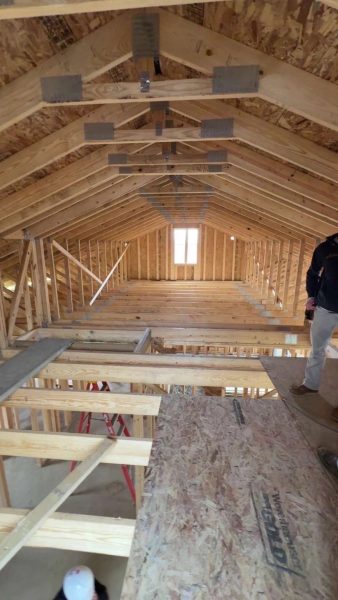
“This year, we used attic trusses so that we could add a third bedroom, bathroom, and bonus room upstairs because this lot is considerably smaller than the last couple of years,” Horvat said.
Horvat and his students have made significant progress on the house. The Carpentry Compact received city approval faster than usual, allowing them to start building on the first day of school. Bradley believes the students in the Carpentry Compact have been working at a good pace and have made significant progress.