























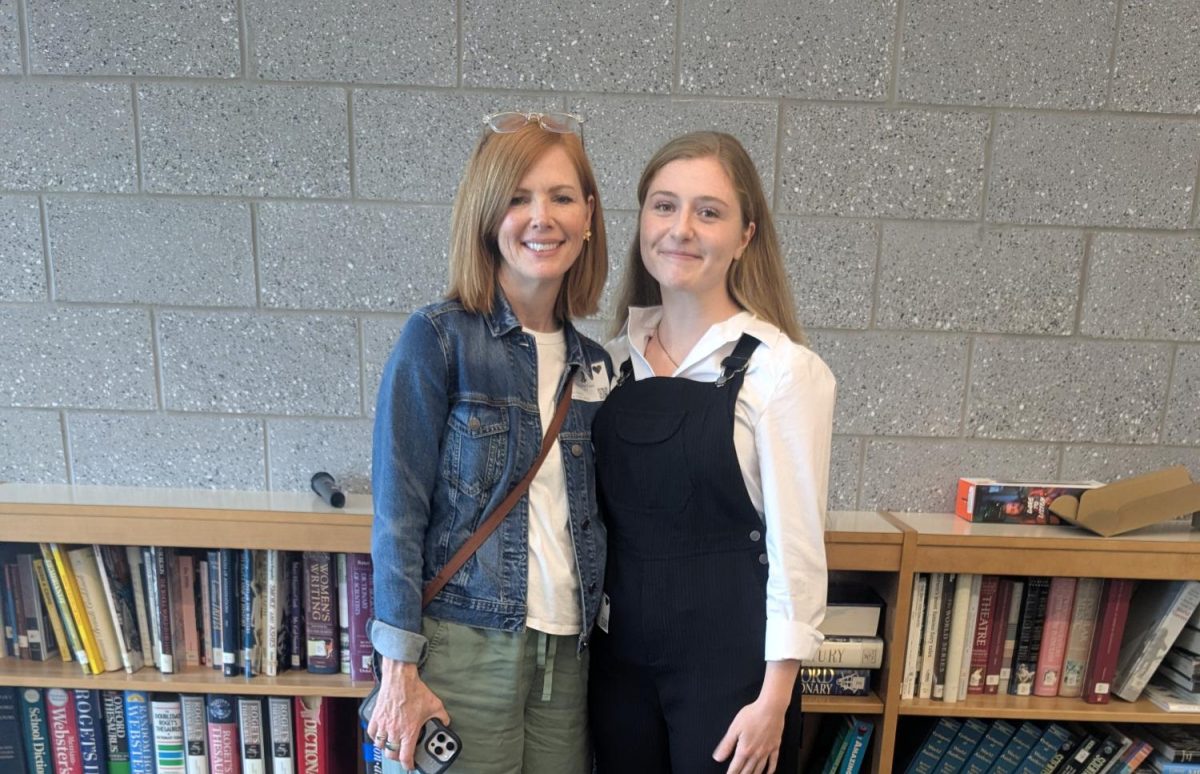
Author Ella Foutz spoke to students on May 7 in the Wadsworth High School Media Center about her writing process and read excerpts from her book, ‘Lullabies for Insomniacs’.
Foutz, 25 years old, shared details about her teenage years at Highland High School and described why she chose to write about her high school mental health experience. She also answered student questions following the reading.
“This is crazy, but like you guys haven’t met me,” Foutz said. “You guys don’t know the names of my siblings or what I even like this. And yet, also, you have met me.”
Foutz said she currently lives in Virginia and introduced herself by describing her interest in storytelling from a young age. She said writing was a way for her to reflect on her mental experience.
“By the time I was a little kid, I loved to write stories,” Foutz said.
She wrote her book to better understand and process her past experiences.
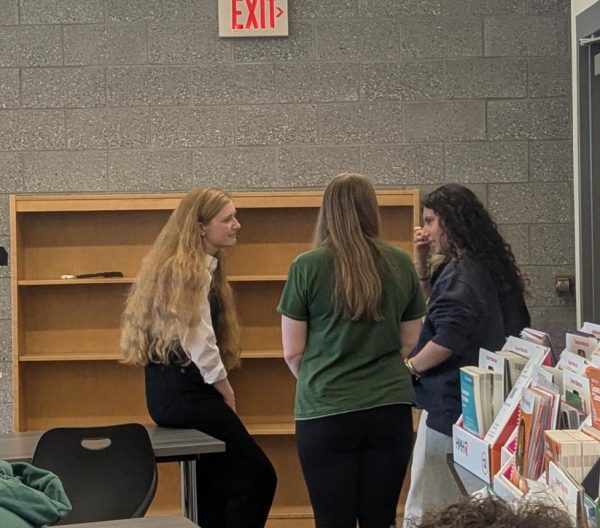
“I think that even if I didn’t know it while I was in the thick of my high school experience, writing a book about it was just always the way that I was going to be able to heal and understand,” Foutz said.
Students listened to her read excerpts of her book.
“ I thought it was kind of an interesting experience,” Trinity Schnick, a student who read the book and met the author, said. “I’ve like never met an author when reading a book like this in school so it was kind of cool.”
During the reading, Foutz shared excerpts that addressed her mental health conflicts and her experiences with depression and bipolar disorder.
“A year later, my psychiatrist would tell me that depression is just a spectrum of genes,” Foutz said. “Everyone is on Spectrum somewhere.”
Foutz also described how she views bipolar disorder in multiple ways.
“On one hand, the bipolar is not me. It’s just chemicals in my brain,” Foutz said. “On the other hand, I am not my mind.”
Foutz read several passages from Lullabies for Insomniacs, including reflections on hospitalization and recovery. She also described moments of finding meaning in everyday life.
“It’s beautiful to just be alive,” Foutz said. “It’s beautiful to just be aware of it.”
Foutz encouraged students to acknowledge their emotions and explained that emotions can be separated from actions or reactions.
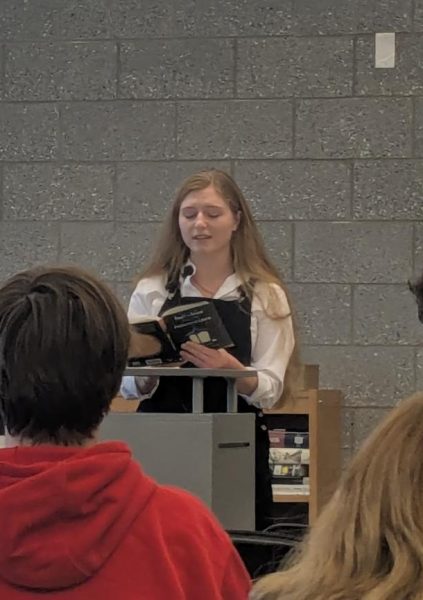
“Emotions are never wrong,” Foutz said. “Observations can run. Expressions of sessions can be rolled.”
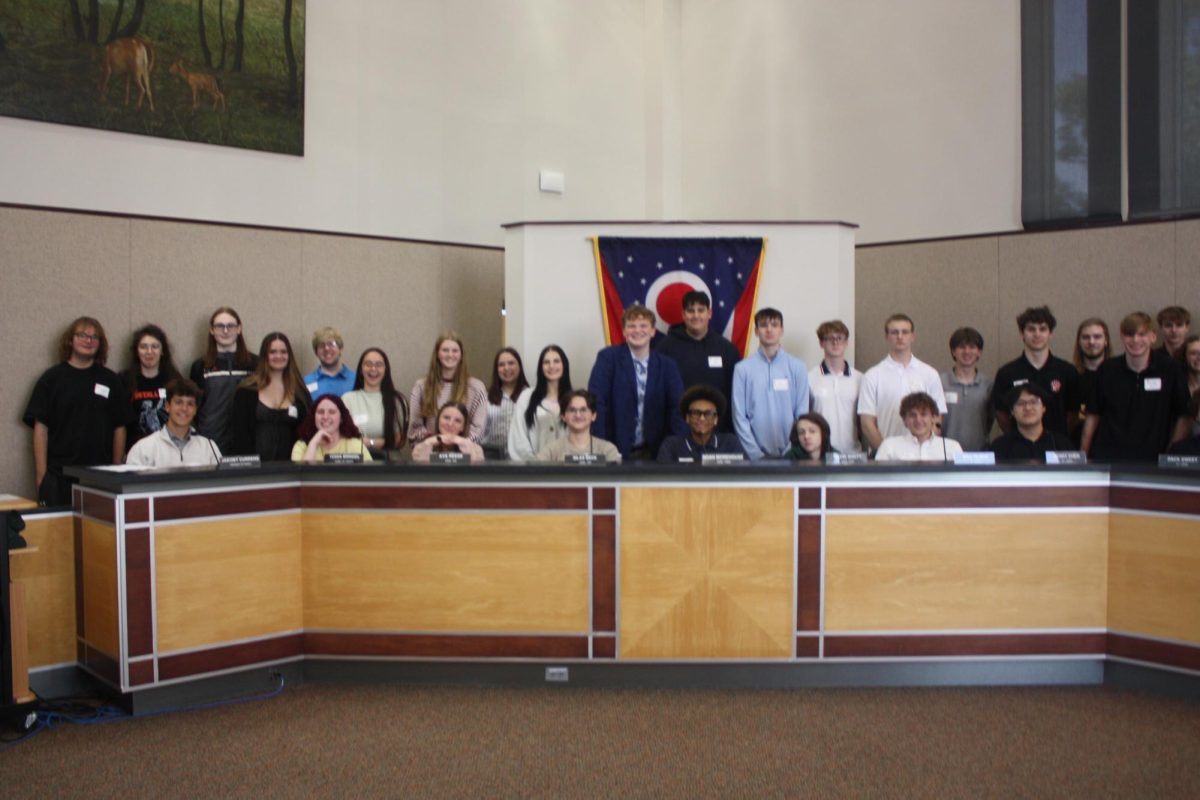
Following the reading, students presented projects connected to the book, including visual representations and thematic interpretations.
“In class we had to pick a category of what chapter we would do and create something off of it, like some classes made book marks.” Schnick said.
Each project was based off of a certain chapter in Foutz book. Students also asked questions based off of the book or questions they had about her.
“I want people [that are] struggling like I did to discover the ways that this thing is not against you.” Foutz said.