



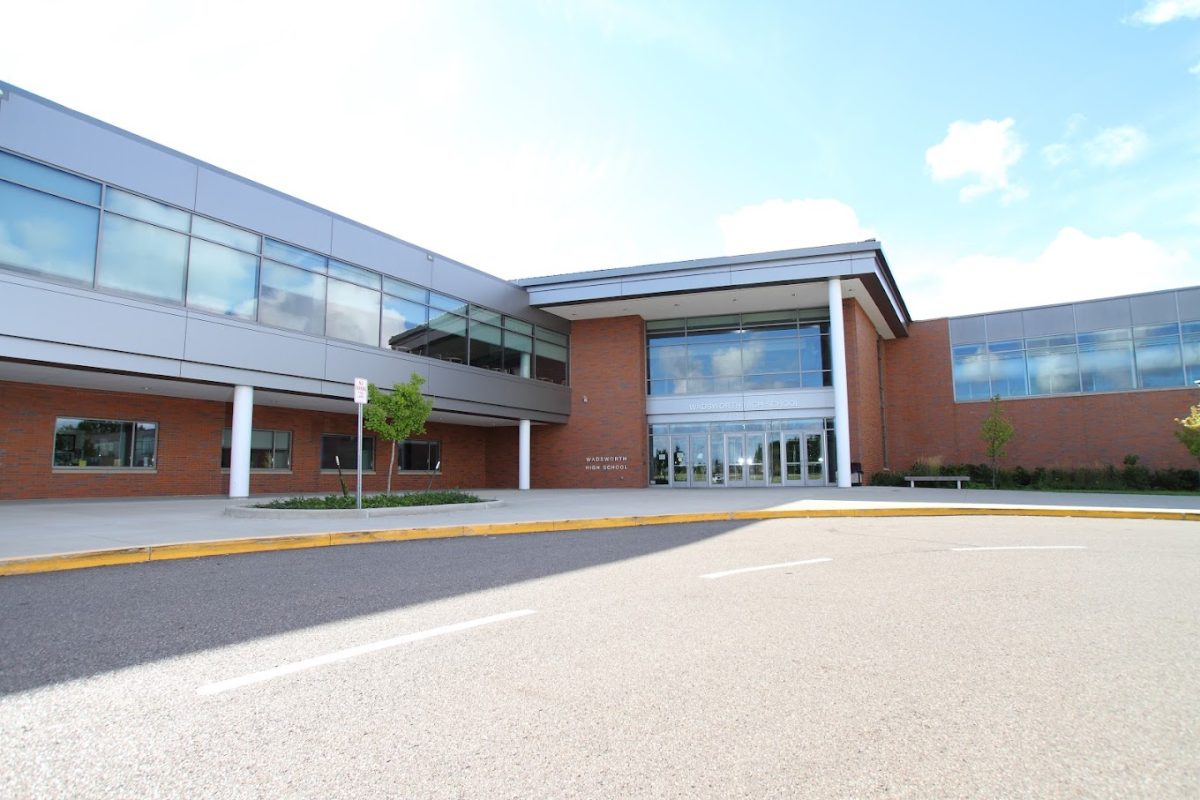


























Wadsworth High School should consider replacing its monthly two-hour delay days, held on the first Thursday of each month, with early dismis
sal days. While delayed starts were created to support teacher collaboration, early dismissals would better support student schedules, instructional time, and consistency across the district.
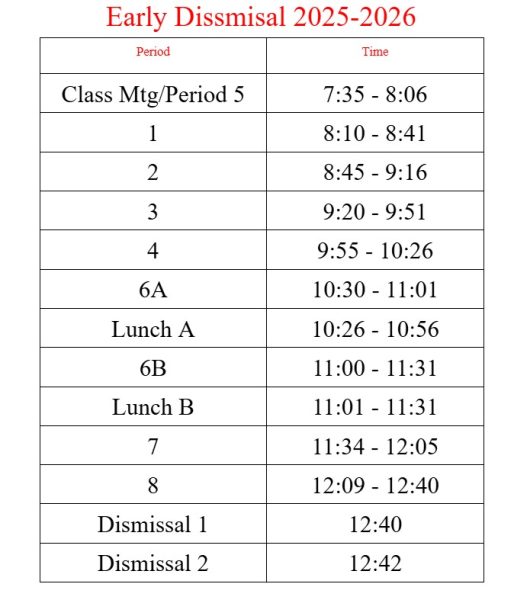
On two-hour-delay days, traffic in the morning becomes congested, pushing arrival times back by nearly 15 minutes. This reduces class periods from 30 minutes to 28 minutes. With an early dismissal schedule, class periods could be extended to 31 minutes while keeping arrival times consistent with normal school days. This would also prevent complications caused by traffic involving the new Intermediate School and elementary buildings across the street.
Early dismissals would also allow students to keep consistent morning routines. Waking up and arriving at school at the same time each day can be more productive for students than adjusting to a delayed start once a month.
Abigail Ruest, a Medina High School junior, attends a school district that uses early dismissal days before holidays.
“We typically have at least one early release a month,” Ruest said. “They’re usually before holidays. Yesterday [Jan. 15] would have been an early release, for example, and we have Friday off and Monday off for MLK
day.”
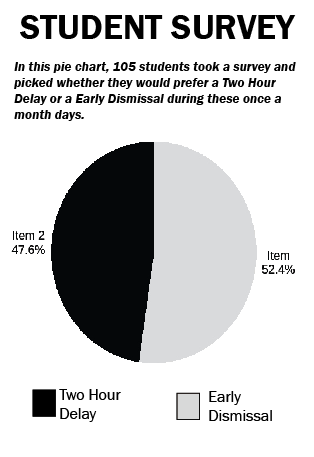
Ruest said two-hour delays would disrupt her routine more than early dismissal days.
“Since I’ve been getting up so early for, like, 3 years now, two-hour delays leave me feeling more tired and more unwilling to go to school, and early release days just feel more fulfilling,” Ruest said.
In addition to student preference, early dismissal days could benefit students involved in athletics or part-time jobs. Having a break between school and activities would allow students time to rest, complete homework, or work longer shifts. Even one early dismissal day per month could give students added flexibility.
“I like that students would get a break from Athletics, or their activities, give them a little bit to be kids.” Steve Moore, assistant superintendent of Wadsworth City Schools, said.
Two-hour delays were originally implemented to give teachers time to collaborate in the mornings when they’re more focused.
“The reason we wanted a delayed start day was that we were looking for collaboration time for teachers,” Moore said. “Finding a time during the day that you could get your math department, your English Department, your teachers together. We thought it would be more productive meetings in the morning.”
Moore also cited safety and accountability concerns as reasons the district has continued using delayed starts.
“One of the challenges that we have as a district is, we’re obviously responsible for every student during the hours of high school 7, 30 to 2:30,” Moore said.
Moore explains that administrators worry students will leave campus early without a parent knowing, or go to places they should not be.
“Most high school kids at minimum would want to walk to the YMCA, would want to walk to the field house,” Moore said.
Despite these concerns, Moore acknowledged the instructional benefits of longer class periods.
“I like the idea of increasing the class period size because teachers, you know, again 25-minute class period is not long,” Moore said.
Early dismissal days would preserve teacher collaboration while improving class time and student consistency. As scheduling challenges continue to evolve, Wadsworth should reconsider whether two-hour delays remain the best way to meet the needs of students and staff.